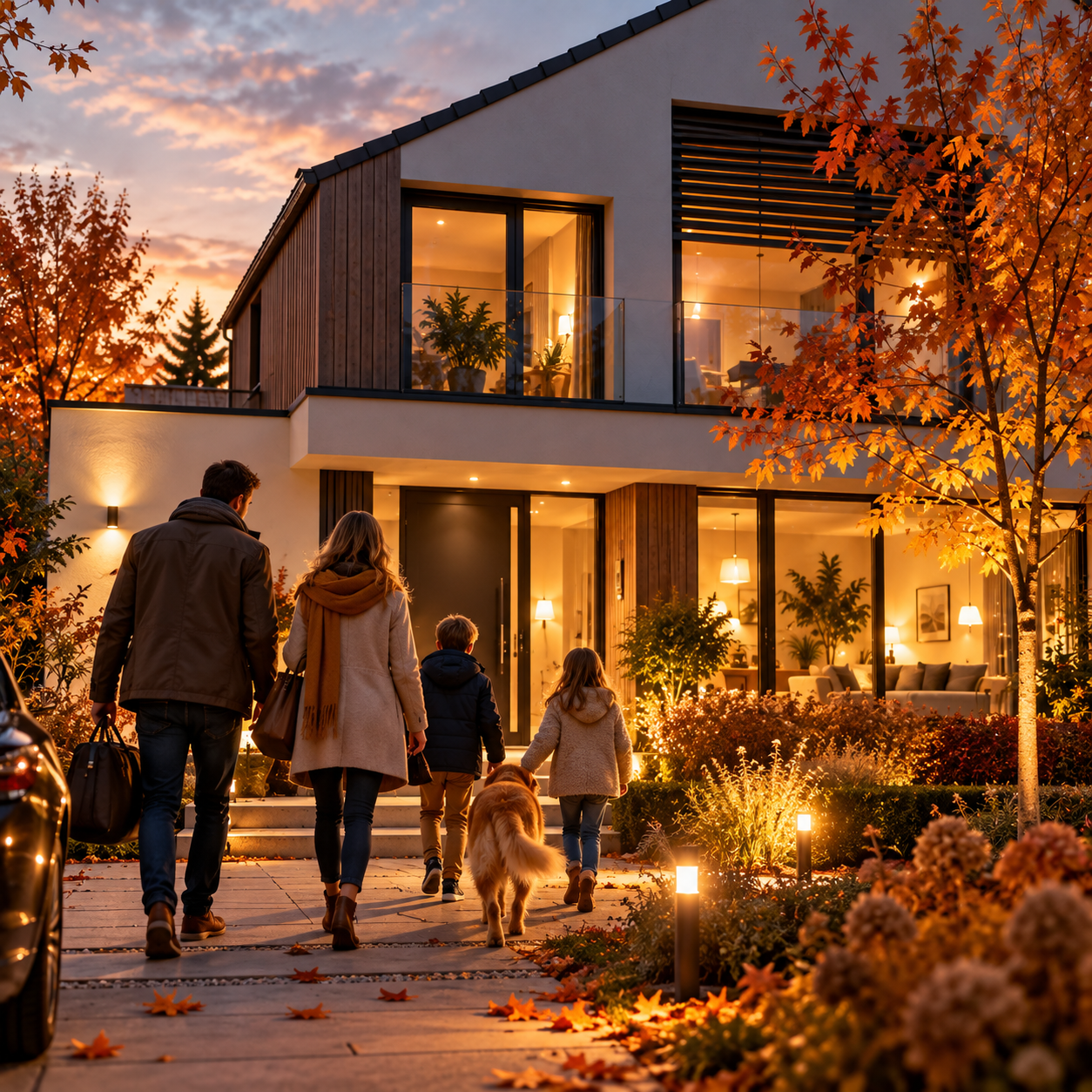
Days are growing shorter, temperatures are dropping, heating systems are gradually being switched back on, and we are spending more time indoors. Autumn marks a real shift in our daily routines—and in how we use our homes.
From lighting and heating to shutters and electrical appliances, certain needs evolve at this time of year. But what if your home could simply adapt to this new rhythm?
Home automation: keeping pace with the changing seasons
Home automation allows you to centralize and automate various household systems. The goal isn’t to add more technology, but rather to make existing systems easier to use and better tailored to the actual needs of those living in the home.
As autumn arrives, several automated features become particularly useful.
Adapting lighting to shorter days
As natural daylight fades, we rely more on artificial lighting. With home automation, lights can be programmed based on specific times, occupancy, or various lifestyle scenarios. It’s a simple way to achieve the comfort you want without leaving lights on unnecessarily.
Managing heating based on actual needs
Cooler temperatures mean it’s time to turn the heating back on. By managing heating on a room-by-room basis and using customized schedules, you can ensure spaces are heated only when they are actually in use, adjusting temperatures to match the rhythm of your household.
These principles align with the recommendations from “L’Energie en Wallonie” (Energy in Wallonia), which advises, among other things, regulating heating room by room and programming it according to when rooms are occupied.
👉 Learn more: “Staying Warm in Winter” – L’Energie en Wallonie
 Making the most of natural resources
Shutters and solar shading systems can also be integrated into automated setups. Managing them in this way allows you to make the most of natural light and solar heat gain throughout the day, and then close the shutters once evening arrives.
 A home that keeps pace with you

Leaving for work, returning home, settling in for the evening, or getting ready for bed—our daily lives are shaped by routines that can be translated into “scenarios.”
With a single command, multiple actions can be triggered at once: turning off lights, adjusting the heating, closing shutters, or preparing the home for the evening.
And as your routines change, your system’s programming can evolve right along with them.
This ability of a building to adapt its operation to the needs of its occupants is also at the heart of the Smart Readiness Indicator (SRI) developed by the European Commission. The SRI focuses, in particular, on the use of smart technologies to improve energy efficiency, comfort, and the management of a building’s equipment.
👉 To learn more: Smart Readiness Indicator – European Commission
Comfort and responsible use
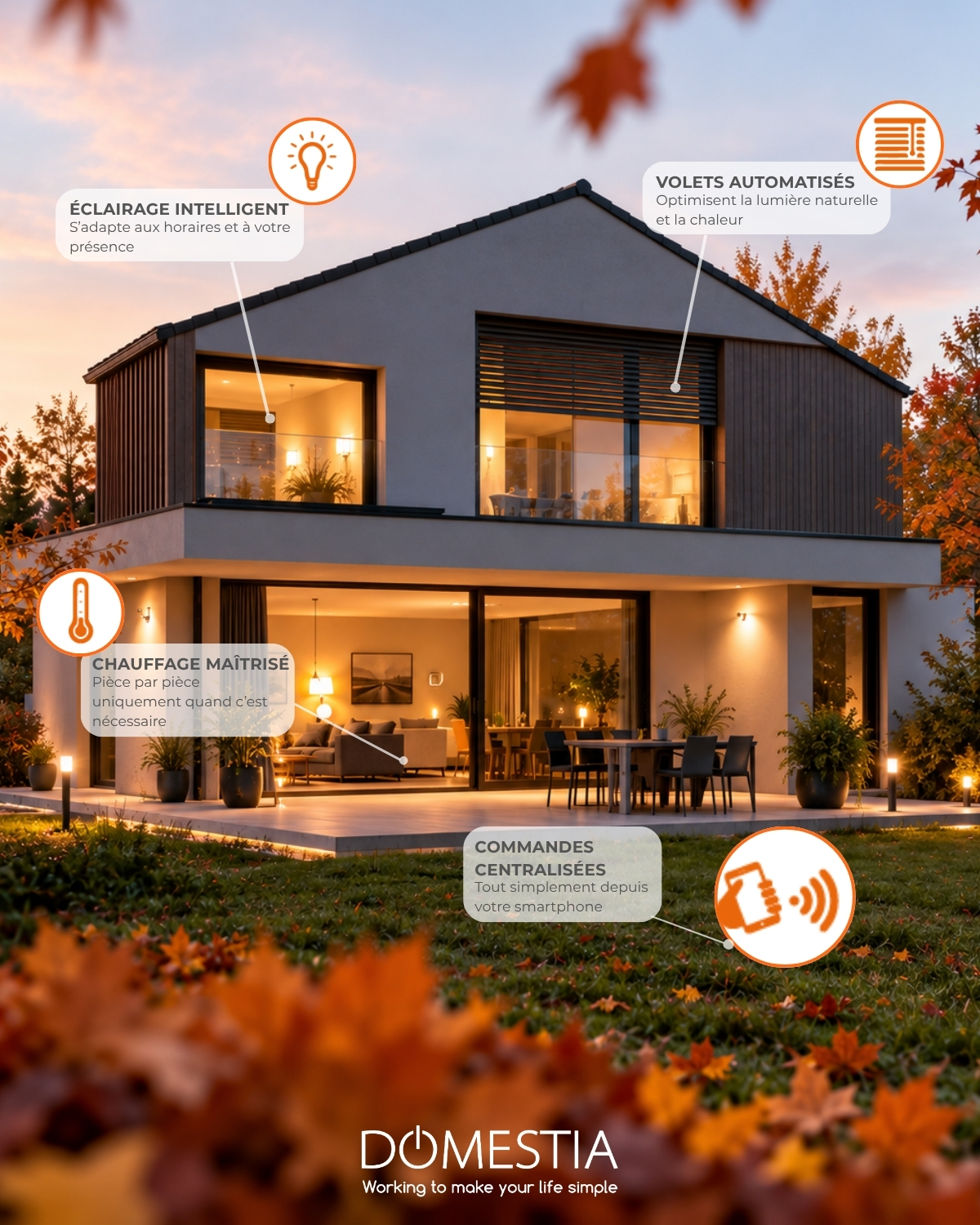 At Domestia, we develop home automation modules and solutions based on a simple concept: technology should serve the occupants, not the other way around.
Automation, therefore, means more than just increased comfort. Intelligent management also helps to limit the unnecessary operation of certain devices and encourages a more sensible use of energy.
This autumn, your home shifts its pace along with you
The transition to autumn is, in fact, a good example of what home automation can offer: as the seasons change and bring about shifts in our routines, the home itself can also adapt how it functions.